
Vote on proposal to reduce Georgia property taxes fails

By Zoe Seiler, Decaturish
ATLANTA — Georgia lawmakers did not pass a resolution March 3 that would significantly reduce property taxes through a state constitutional amendment. But the bill will be reconsidered on Wednesday, March 4.
House Resolution 1114 would reduce homestead property taxes to 10 percent of the assessed value by 2032. The original proposal would have eliminated property taxes, but the House Rules Committee introduced the substitute bill that was voted on.
HR 1114 creates a ballot measure that would be on the November 2026 ballot. House Bill 1116 is the enabling legislation to implement the measure.
A constitutional amendment requires a two-thirds majority vote by lawmakers, which means all 99 Republicans and 21 Democrats in the House have to support the bill. The vote on HR 1114 was 99-73. The legislation needs 120 votes to pass the House. No vote was taken on HB 1116 on March 3.
The bills have to pass by Crossover Day, March 6, to have a chance of passing by the end of the legislative session.
Rep. Shaw Blackmon, R-Bonaire, presented the bill, emphasizing the need for relief from rising property taxes. According to Blackmon, property taxes have increased 49 percent since 2019
“Our homeowners are having to make some impossible choices and for many this means paying for necessities like health care or groceries instead of their property tax bill,” Blackmon said. “We’ve all received emails from constituents worried their skyrocketing property taxes will force them from their homes.”
The legislation strives to provide homeowners with savings on expenses and make homeownership more attainable.
“Simply put, this act addresses this systemic problem by fundamentally changing Georgia’s homeowners’ relationship with property taxation and homeownership,” Blackmon said. “We intend to provide real, meaningful and decisive property tax relief, while at the same time remaining respectful of our local governments’ services and operations.”
If enacted, the taxable value of homes would decrease over 10 years from 40 percent to 10 percent, at 3 percent per year. It also eliminates property taxes for disabled veterans.
“It enables locals to use certain portions of the sales tax code as a direct dollar-for-dollar property tax offset and backfill if they so choose,” Blackmon said. “It also establishes a grant fund to help backfill local governments using proceeds dedicated from high-speed data centers.”
Several Democratic lawmakers spoke in opposition to the bill, saying that the “math isn’t mathing.” They also highlighted that property taxes pay for local schools and services, like school buses, sanitation collection and public safety.
Minority Leader Rep. Carolyn Hugley (D-Columbus) said the legislation is an exercise in politics and attracting voters to the polls. Members of the House and Senate are qualifying to run for office this week.
She added that if property taxes were eliminated, it would reduce revenue for local schools and municipalities, leaving them to either make up the shortfall or cut services.
Hugley and other speakers noted that a constitutional amendment is a permanent decision.
“This measure should be something that could stand the light of day, not something that was passed last evening; people are still looking at it, and people are still looking at it and trying to see where they are,” she said.
The House stood at ease around 2:45 p.m. to pass out the legislation to lawmakers. The debate on the bill started around 3:10 p.m.
Hugley added that sales tax would be imposed on everyone.
“Homeowners are very important but they’re only 65 percent of the people of this state,” Hugley said. “What about the other 35 percent that’s going to have to pay more for all the things that they do each and every day?”
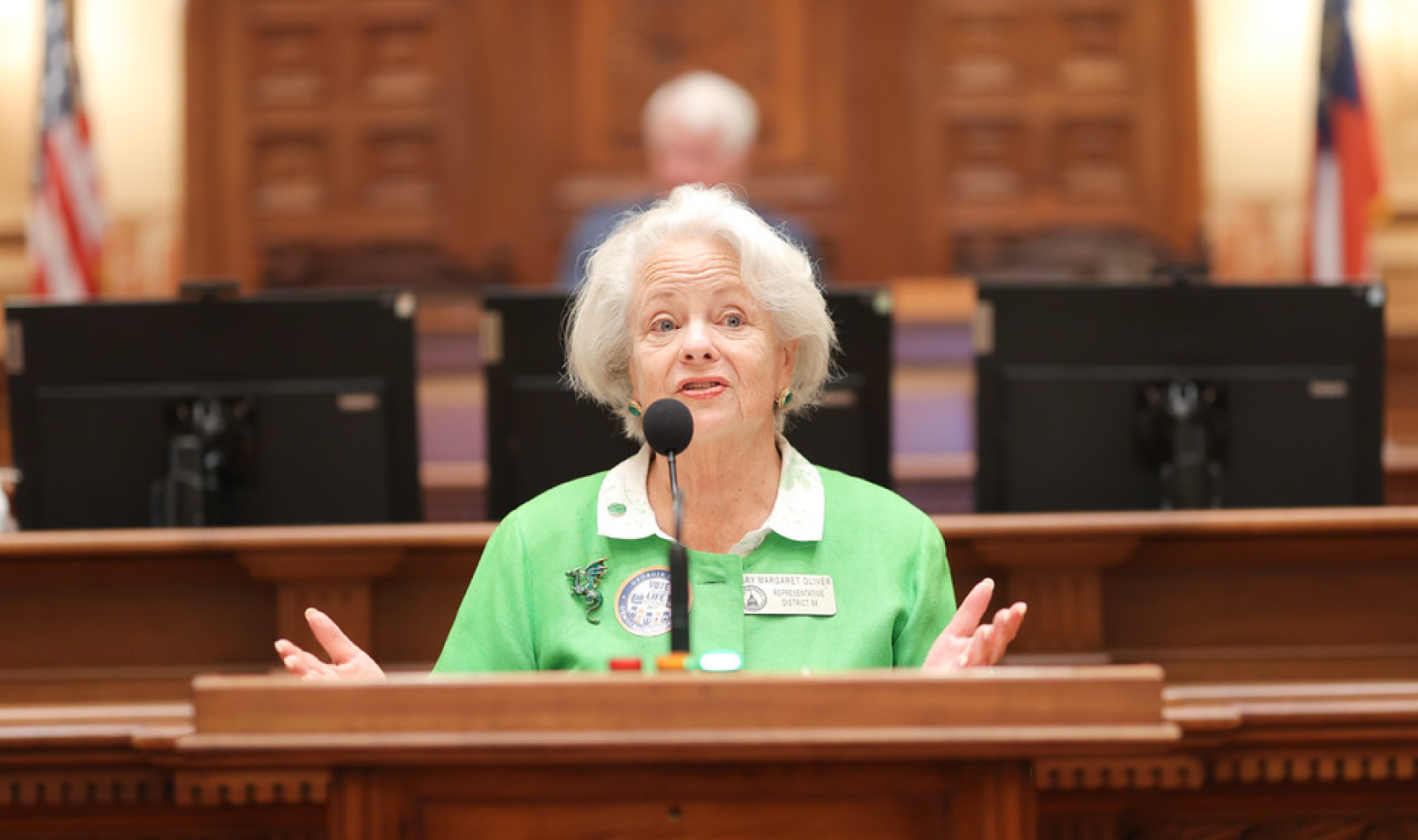
Ahead of the vote on March 3, Rep. Mary Margaret Oliver, D-Decatur, told Decaturish that Republican leadership was working to secure votes for HR 1114.
“I remain opposed to it on behalf of my [two] school systems and my cities and county, but I’m waiting to see the final product that they’re offering for a vote,” Oliver said. “I have a hard time imagining that we could completely get rid of property taxes and supplement it with sales tax or other expenses.”
.png)


