
New Georgia dashboard to track Mental Health Parity Act insurance violations

By Jess Mador, WABE
Georgians will soon have access to a new centralized dashboard tracking issues with insurance coverage for mental health care claims under the state’s mental health parity law, and the law’s implementation. The new site, to be monitored by the nonprofit Georgians for a Healthy Future, is set to launch as top state officials urge more progress on enforcing Georgia’s Mental Health Parity Act.
The 2022 law, also known as H.B. 1013, requires Georgia health insurers to cover mental health and substance-use conditions on par with coverage for physical health conditions.
So far, compliance has been spotty, according to state numbers. A recent audit by the Office of the Insurance and Safety Fire Commissioner flagged 22 insurers for violating the law. The review identified more than 6,000 parity violations, including claims being reprocessed unnecessarily, inconsistent application of benefits and unnecessary prior authorizations, among other issues.
Commissioner John King announced nearly $25 million in penalties — up to $2,000 for every violation — for the companies, along with a requirement that they provide corrective action plans to the state.
“I want insurers to know that I am serious about the health and well-being of all Georgia consumers,” he said. “I will not hesitate to take action against any company that continues to violate the law – no exceptions.”
Now, advocates from the Georgia Council for Recovery want the state to establish a new dedicated fund for distributing money collected from the penalties to support community-based mental health and substance use programs statewide.
“It is abhorrent that there are fines in the first place. Let me provide clarity: it is a pro-family position to expect these funds to be legally directed to community-led programs that help those who have suffered too much and for too long. It is also pro-Georgia to stand with those who need and deserve support and help with these dollars,” said Georgia Council for Recovery Strategic Policy Advisor Jeff Breedlove.
King has said he’d consider increasing the penalties on insurers who fail to meet the requirements.
Georgia ranks 46 nationwide in access to mental health care, according to Mental Health America.
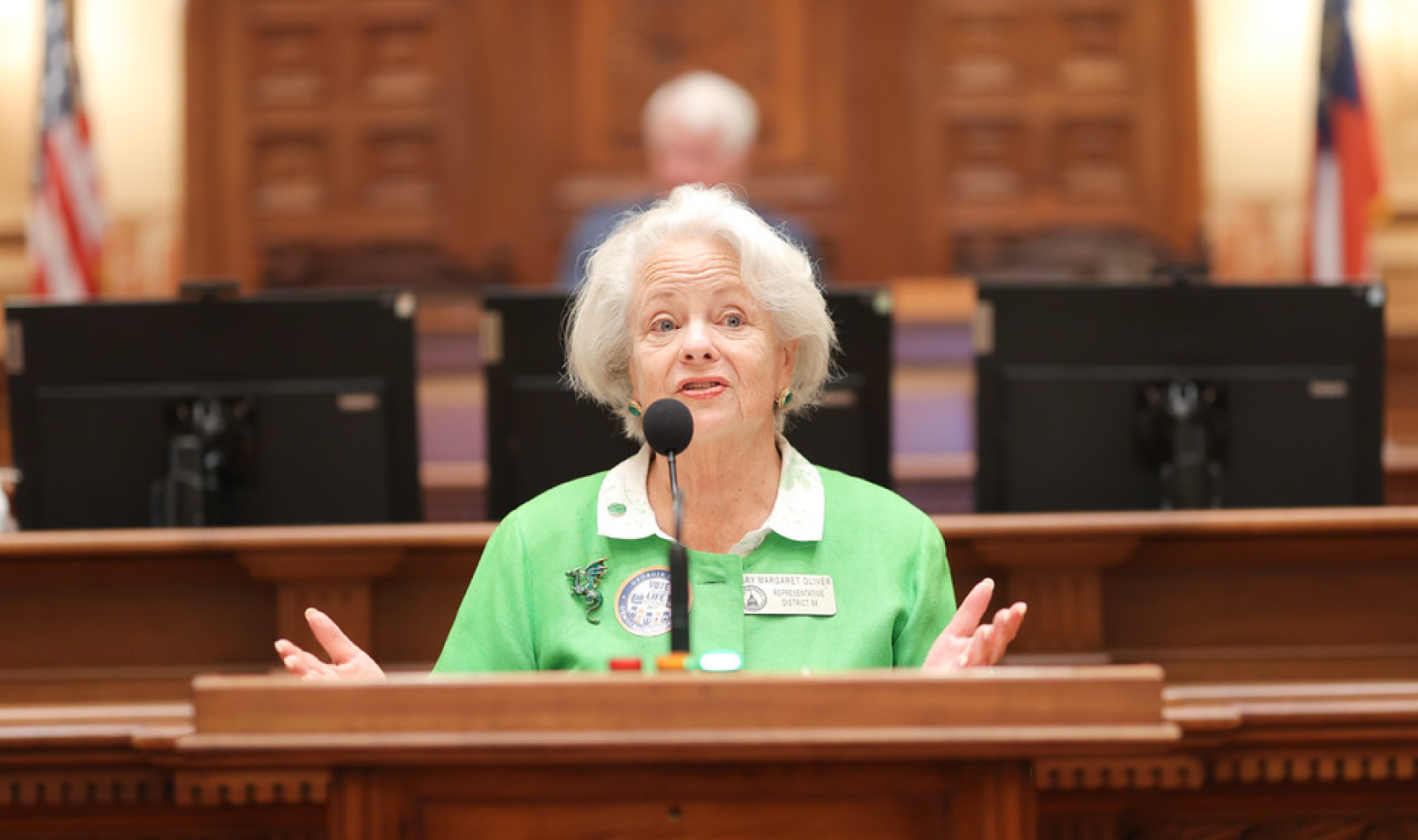
“Parity began as a matter of law in 2008 under the presidency of George Bush. In 2022, House Bill 1013 began to set state standards, nationally recognized state standards, for implementation of parity entitlements. The work continues, the work is not over,” Decatur Democratic Rep. Mary Margaret Oliver said.
“Particularly Georgia’s children, 70% of whom are in need of mental health services and don’t receive them. That’s a very large number. It’s a significant percentage of our children’s population and we must do better.”
Oliver joined mental health advocates at a Capitol event marking Georgia’s third annual Mental Health Parity Day.
The Carter Center-hosted event included unveiling plans for the new dashboard tool, which officials say would also display insurer parity compliance data updated in real time.
“We must acknowledge the growing demand for mental health care services across the state as well as across the nation, and the challenge that it poses to the families, especially those who are uninsured or underinsured. Workforce shortages, service availability, and affordability continue to create barriers,” said Dr. Kashef Ijaz, Carter Center vice president for health programs.


.png)


