
Georgia Democratic House members announce housing affordability legislation package

By Zoe Seiler, Georgia Press
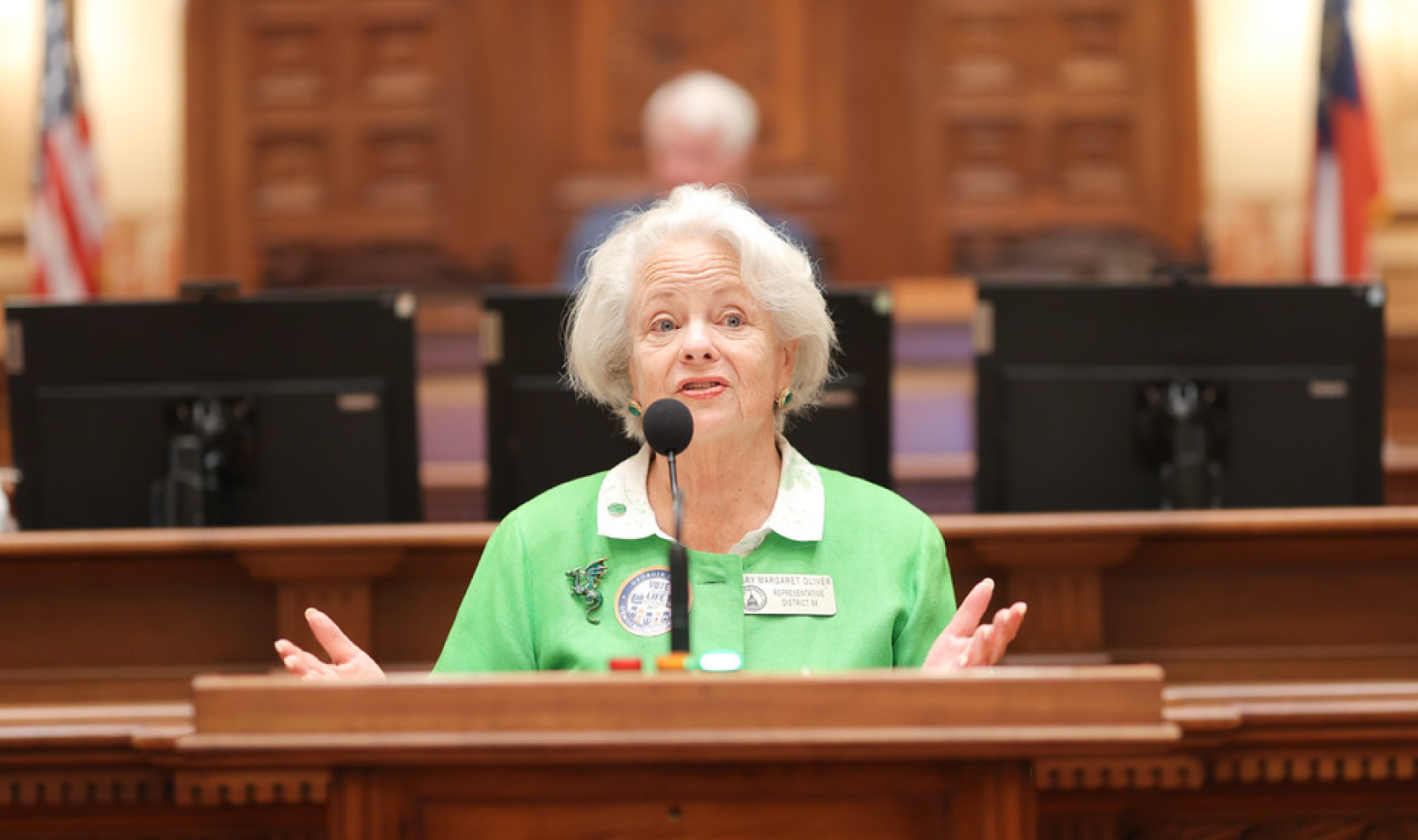
ATLANTA – Democratic Georgia House members are working to address various housing issues. State Reps. Mary Margaret Oliver (D-Decatur), Phil Olaleye (D-Atlanta), and others announced a bipartisan package of legislation on Feb. 12 to address affordability.
That package also seeks to expand housing supply, strengthen tenant protections, and encourage more affordable housing development.
“There is an issue of housing affordability across Georgia,” Oliver said. “We need more doors. We need more opportunities and a wide variety of ways.”
The House Minority Caucus’s legislation includes proposals related to tax incentives, tenant protections, zoning reform, and affordable housing development.
“Whether you’re trying to buy your first home, stay in the home you already have, or just keep up with rent continuing to jump over and over and over again, housing has become the biggest bill facing families,” Olaleye said.
The following House Bills are included in the representatives’ legislative package:
Homestead exemption for public service employees
HB 1145, sponsored by Rep. Miriam Paris (D-Macon), would create a statewide homestead exemption for certain public service employees, like police officers, nurses and teachers.
“I think that it is incumbent upon us to take good care of those that take good care of us, and this bill seeks to do that for them.”
Single-family housing affordability
Oliver sponsored HB 1153, which would allow developers to use the state’s low-income housing tax credit (LIHTC) to build affordable single-family homes. These homes would be available to individuals earning up to 80 percent of the area median income.
Currently, LIHTC is only available for multifamily developments, like apartments or fourplexes.
“The LIHTC program of tax credits giving financial support for the purchase of lower-income, moderate-priced apartments can be duplicated in the single-family market,” Oliver said.
She added that it’s an effort to address incentives and produce more for-sale housing options.
Removing zoning regulations for smaller homes
HB 1166, sponsored by Rep. Tangie Herring (D-Macon), would remove zoning regulations for smaller homes.
“It removes the arbitrary zoning restrictions that currently ban safe and high-quality homes of 400 square feet or less,” Herring said. “You might know these are tiny homes, carriage houses or granny flats.”
Homeowners should be able to build secondary homes and should be part of the solution to create more options, she added.
“We all know the American Dream of homeownership is quickly slipping out of reach for too many Georgians,” Herring said. “We are facing a dual crisis right now. We have skyrocketing costs that are hurting families and we have a desperate lack of housing inventory. Simply put, we do not have enough homes in Georgia.”
Empowering development authorities to help with affordable housing
HB 1177 expands the authority of local development authorities to allow them to finance or develop affordable housing. Rep. Al Williams (D-Midway) sponsored this bill.
“It is imperative that as development authorities, we’re able to get involved, able to help move these projects, but most importantly we’ve got to bring the cost of housing under control,” Williams said. “You can’t be the best place to do business in America and one of the hardest places to live in the south.”
Prohibiting investors from acquiring single-family homes before Georgia residents can
HB 1252, sponsored by Olaleye, would prohibit investors from acquiring single-family homes before Georgia residents.
“Before a large institutional investor can buy a newly listed single-family home, those families or that owner-occupied buyer would have first dibs within a 30-day window to purchase that home first,” Olaleye said.
He also sponsored HB 305 last year, which prohibits large companies from purchasing single-family homes in Georgia.
Broadening minimum habitability standards
HB 1171, sponsored by Rep. Spencer Frye (D-Athens), would establish minimum habitability standards consistent with recognized housing standards.
Some of the requirements include making all repairs necessary, keeping all common areas in a clean and safe condition, maintaining utilities and appliances, providing trash receptacles and supplying running water.
If those conditions are not met, tenants could terminate their lease or withhold rent, recover damages or make repairs and deduct the cost from the rent.
– Rep. Saira Draper (D-Atlanta) is the sponsor of HB 1221. The bill would require homeowners associations to provide written notices of fines or delinquent fees and give a reasonable opportunity for homeowners to pay before assessing attorney fees and costs.
Requiring home values be assessed at 100% for corporate investors
HB 1017, sponsored by Rep. Dar’shun Kendrick (D-Lithonia), would require home values to be assessed at 100% for corporate investors. Most homes are assessed at 50 percent or less of the home value.
“We know that they are creating a housing shortage in the state of Georgia,” Kendrick said. “As opposed to assessing the value at 40 percent of a home, that many of us have our homes assessed at, large corporate investors would have to pay 100 percent of the assessed value of the home that they are renting out.”
Rep. Gabriel Sanchez (D-Smyrna) sponsored HB 679, the end rental price-fixing act, in 2025. The bill is still active this session.
“I am a renter myself, like the majority of my district. In the past eight years, my rent has almost doubled from $850 a month to $1,550 a month, and my story is not unique,” Sanchez said. “It’s the story of families across Georgia who are working hard every single day, doing everything right, and yet they’re still falling behind.”
He said a driver of rent increases is due to companies that sell their software to landlords and use data to calculate the highest rents they can charge in a market. HB 679 would end this practice.
“I think it’s important that we do everything in our power to ensure that we have affordable housing here in the state of Georgia, and end these price-fixing and price-gouging practices that are hurting working Georgians,” Sanchez said.
House Bills 1145, 1166, 1177, 1221, and 1252 have gained bipartisan support.
“There are many different bills, many different actions in the federal government and the state government to address this issue and I’m hoping for progress in 2026,” Oliver said.
This story was provided by WABE media partner Georgia Press.
.png)


