
Former CDC officials say shakeup puts public health at risk
By Zoe Seiler, Decaturish
ATLANTA — State legislators and former public health workers called on Republican politicians to stand against the violence directed at the Centers for Disease Control and Prevention.
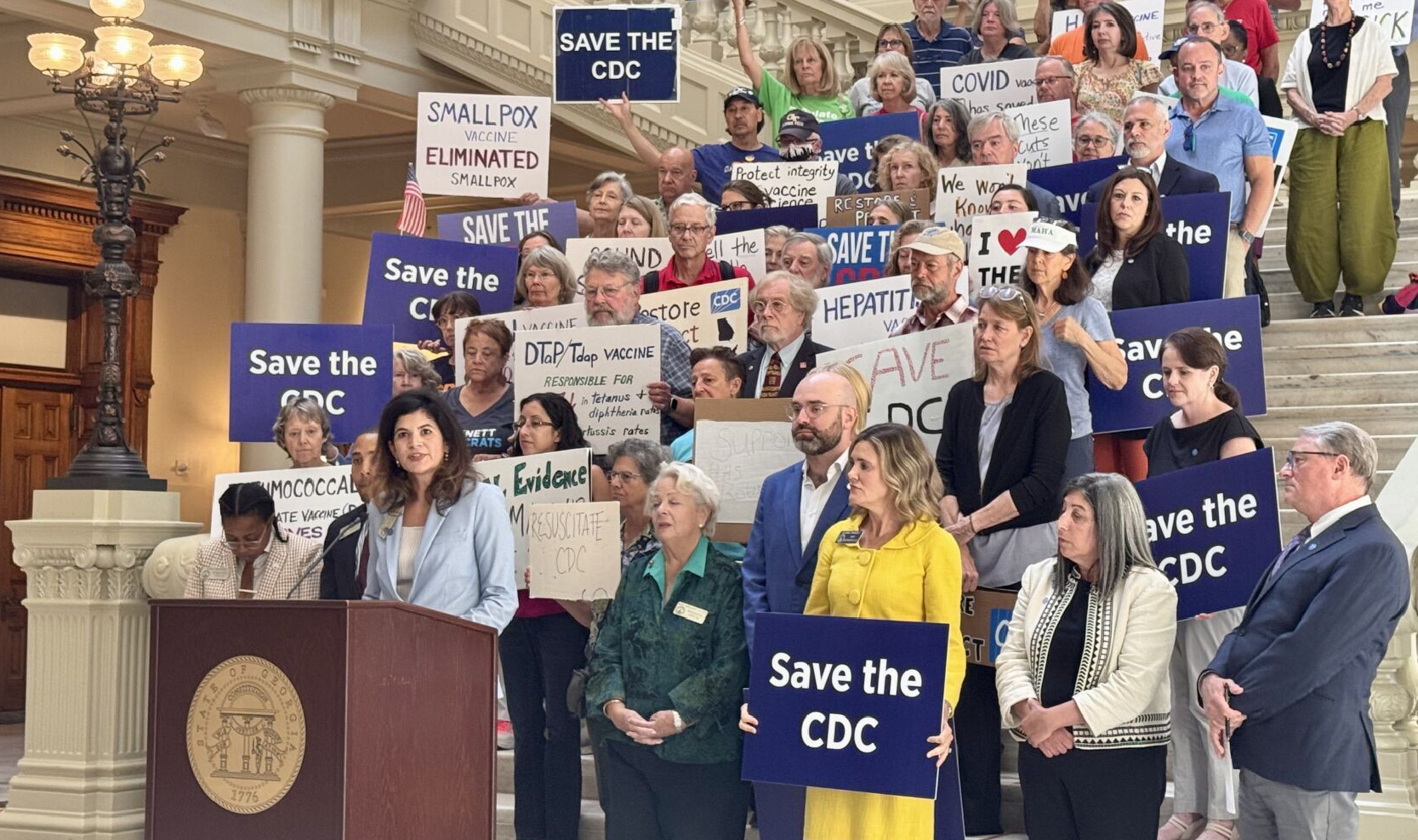
During a Sept. 2 event at the state Capitol, several former CDC employees warned of risks to public health when funding and staff are cut. Public health is embedded in many aspects of daily life, from food to clean drinking water and immunizations.
Legislators from DeKalb County held a roundtable discussion and press conference with former CDC employees on Sept. 2 to continue shedding light on the agency’s work amid the aftermath of an attack on the CDC. The CDC is located in DeKalb County, on Clifton Road near Emory University.
Six CDC buildings were shot almost 200 times as a shooter relinquished 500 bullets at the agency on Aug. 8. The shooter claimed the COVID-19 vaccine made him depressed and suicidal. The shooter, as well as DeKalb County Police Officer David Rose, died during the incident.
Current and former CDC officials have demanded a stronger reaction from President Donald Trump and Health and Human Services Secretary Robert F. Kennedy, Jr.
Trump has not made a public statement about the shooting. In a statement posted on X following the shooting, Kennedy said, “We know how shaken our public health colleagues feel today. No one should face violence while working to protect the health of others.”
HHS Spokesperson Andrew Nixon has also accused the media of exploiting the shooting for political gain.
AFGE Local 2883, a union representing about 2,300 CDC employees, is calling for additional safety and security measures at the CDC facilities in Atlanta. The union has a list of demands for the agency, including having a seat at the table to reshape safety and security measures.
According to CNN, CDC employees must return to the office in Atlanta on Sept. 15. Many have worked remotely since the attack.
The legislators who represent the areas near and where the CDC is located called on Republican leaders in the General Assembly to take action to address gun violence.
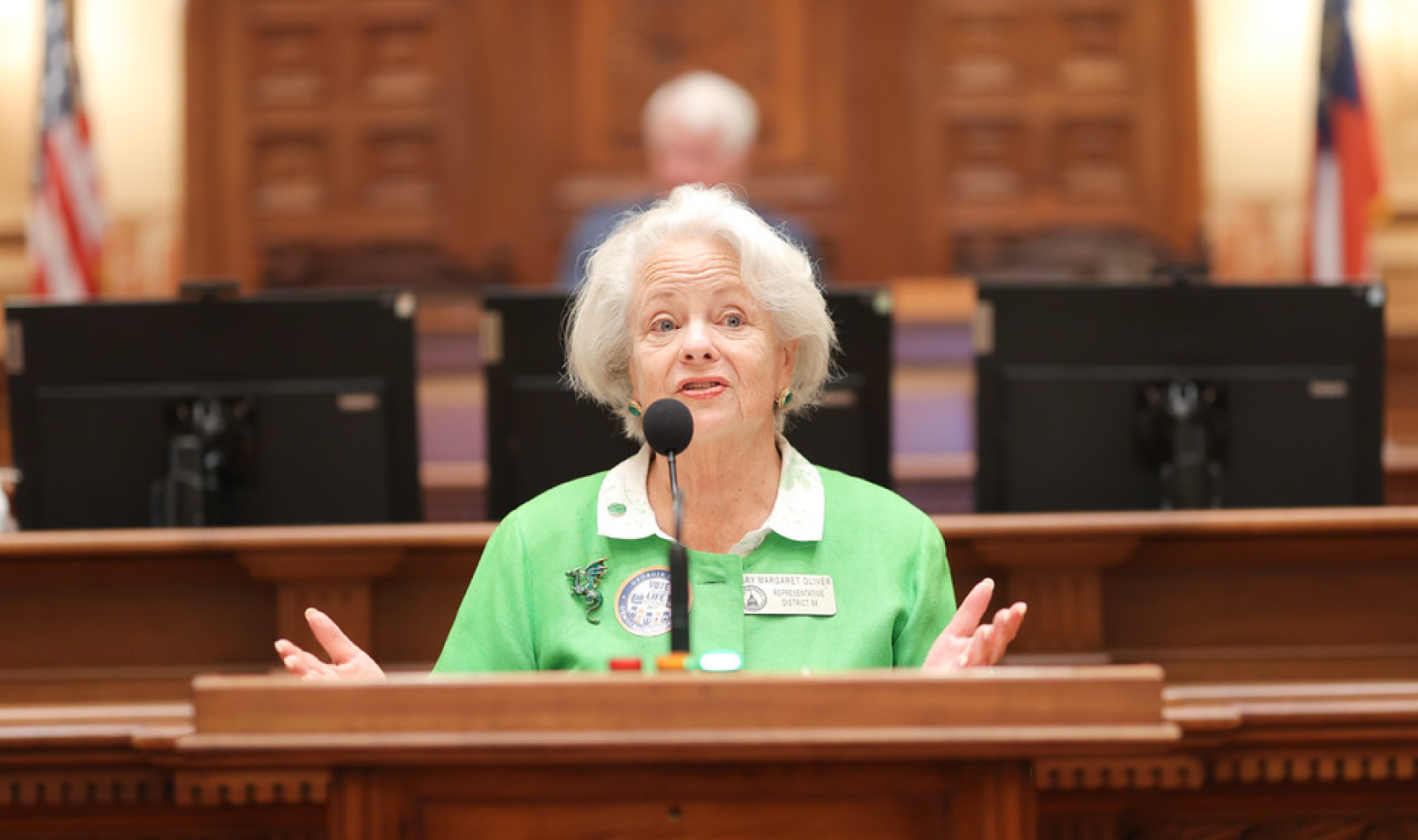
Rep. Mary Margaret Oliver (D - Decatur) has said that gun violence is the most partisan issue she has dealt with in the General Assembly. Throughout her political career, lawmakers have had bipartisan discussions about gun storage, liability and the need for gun violence prevention.
But legislation has not moved forward in the General Assembly to address gun safety.
“I call upon the Senate leader, Burt Jones, the House leader, Speaker Jon Burns to reconvene a bipartisan hearing and discussion about the bipartisan need for gun violence prevention,” Oliver said. “We are at a point where we know our constituents care about this issue, and we are at a point where an honest discussion is more needed now than it ever has been.”
Lawmakers also called on Gov. Brian Kemp to publicly support the CDC, create state-based public health strategies, build or join multi-state coalitions to defend science and share resources, and reaffirm a commitment to transparency and public trust when it comes to public health.
“On Aug. 8, Gov. Kemp rightly praised Officer Rose for his heroism during the attacks on the CDC campus, but he said nothing about the terror endured by CDC staff, the children and the caregivers at the on-site childcare center, or the ripple of fear felt across nearby institutions,” Rep. Saira Draper (D - Atlanta) said. “That silence matters.”
She added that legislators are calling on Kemp to support the CDC as a cornerstone of the state’s identity and global leadership.
“Express empathy for the staff who have been terrorized, dismissed and demoralized,” Draper said. “Stand with the scientists, the epidemiologists, the data analysts and the community of health workers who have dedicated their lives to protecting ours.”
Decisions about vaccine access are being politicized, and Georgia could develop a state-based vaccine access strategy for purchasing vaccines and allowing state-run clinics to offer essential vaccinations under physician guidance, she added.
‘Death by a 1,000 cuts’
In April, HHS sent layoff notices to thousands of health workers at the CDC and other federal agencies, which was part of an overhaul to shrink the agencies that protect and promote public health, according to CNN.
Those cuts included scientists, doctors, researchers, senior leaders and support staff. In August, about 600 CDC employees received permanent termination notices.
Recently, three directors at the CDC also resigned due to the politicization of public health, according to Healthbeat.
Dr. Dan Jernigan was one of them. He led the National Center for Emerging Zoonotic and Infectious Diseases and worked for the CDC for 31 years. He worked through multiple agencies and presidents throughout his career.
He was able to get public health work done during that time, “but we find ourselves now with the difficulty in doing that because of the current secretary,” Jernigan said during the press conference Sept. 2.
“I think you can almost see this as a death by a 1,000 cuts,” Jernigan added. “We’re cutting staff. We’re cutting resources. We're undercutting science, and that's leading to the undermining of trust.”
Jernigan and the other former CDC employees in attendance said that science needs to be put first, and ideology second.
On Aug. 8, Jernigan was in one of the CDC buildings that was hit by gunfire. Employees hid in closets, barricaded offices, and crawled through hallways to avoid the gunshots and waited for hours to be escorted out of the buildings by law enforcement.
Jernigan said that while this was a physical attack, the CDC has been attacked by rhetoric and “the kinds of information put out there really does not lead us to better public health.”
The CDC is not perfect and constantly seeks ways to improve, making changes all the time, Jernigan said.
“Right now, however, I was in a situation where I could not stay any longer because the current secretary, and the immediate offices of the secretary, were not following the existing executive order on transparency in gold standard science,” he said.
The public and officials need to trust and understand how studies are being done and that objective approaches are being followed, he said. Former CDC Director Susan Monarez's firing was the final straw for Jernigan, Dr. Demetre Daskalakis and Dr. Deb Houry.
Houry had been asked to lead the transition to the Trump administration, which meant working with HHS to see how the department’s priorities and the CDC’s goals aligned.
“When I look at how, right now, decisions about vaccines are being made based on opinion and not data or science, that concerns me,” Houry said. “When I see how our non-communicable diseases, like chronic disease and the work we’ve done on overdoses are being defunded and moved, I'm worried we're not going to be prepared for those health threats as well.”
She is concerned about the loss of staff and funding to state and local health departments. The Georgia Department of Public Health and local agencies, like the DeKalb Board of Health, receive federal funding through the CDC.
When Houry was asked to remove scientific documents from the CDC website, she couldn’t do it. She and her colleagues couldn’t stand by as they watched life-saving work be politicized.
“You all matter to us, and we are here because now is the time to look at how we can work together, work as Republicans and Democrats, to make a difference in our community, right here in Atlanta and Georgia,” Houry said.
.png)


