
DeKalb legislators oppose property tax bills in Legislature
By Zoe Siler, Decaturish
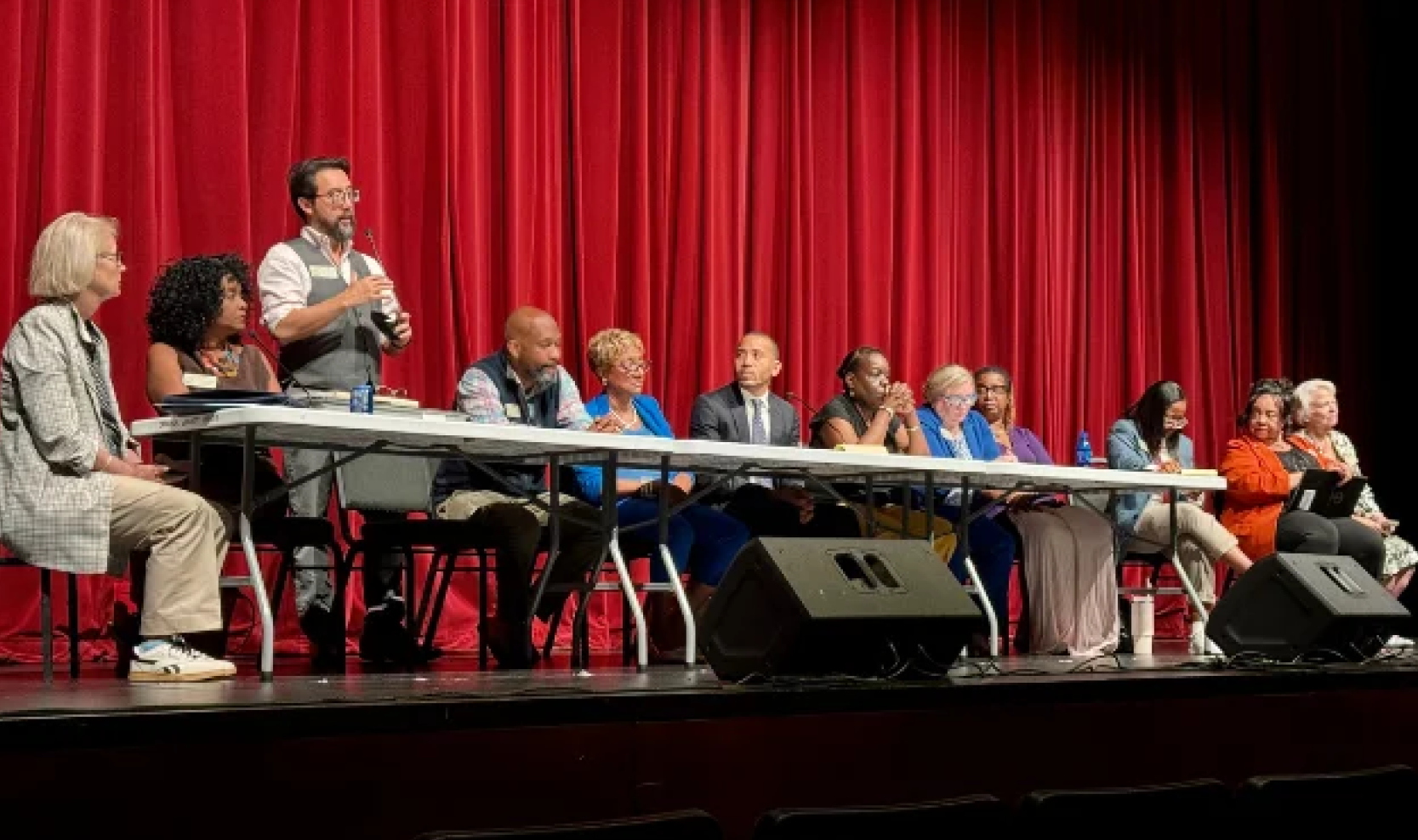
ATLANTA – Members of the DeKalb House delegation are opposed to two bills going through the chamber that would significantly reduce local property taxes amid concerns about education funding.
The delegation said the proposals could result in a $100 million budget deficit for the DeKalb County School District and impact funding under the education special purpose local option sales tax.
House Resolution 1114 would reduce homestead property taxes to 10 percent of the assessed value by 2032. The original proposal would have eliminated property taxes, but the House Rules Committee introduced a substitute bill instead, significantly reducing what homeowners would pay.
HR 1114 creates a ballot measure that would be on the November 2026 ballot. House Bill 1116 is the enabling legislation to implement the measure.
A constitutional amendment requires a two-thirds majority vote by lawmakers, meaning all 99 Republicans and 21 Democrats in the House must support the bill.
A vote in the House on HR 1114 on March 3 failed, 99-73. The legislation needs 120 votes to pass the House. It was reconsidered and added to the general calendar on March 4, meaning the bill can be called for a vote at any time. No vote was taken on HB 1116 on March 3.
The bills have to pass the House by Crossover Day, March 6, to have a chance of passing by the end of the legislative session.
“This is not a regional debate—it is a question of statewide fiscal stability. Any reform must include a clear, responsible replacement plan to protect every child in Georgia,” the DeKalb County delegation said in a news release.
According to the news release, the reduction in local property taxes would shift financial responsibility to counties and municipalities without providing a new funding mechanism. Local school districts would also have to absorb any financial losses.
“If enacted, the impact would be immediate for Metro Atlanta districts, particularly DeKalb County,” the delegation said. “DeKalb County serves more than 90,000 students, making it one of the largest school systems in Georgia. A $100 million shortfall would likely result in larger class sizes, teacher layoffs and staffing freezes, cuts to student support services, reduced funding for special education and academic intervention programs, deferred maintenance and facility upgrades and potential school consolidations or closures.”
They added that any proposal that doesn’t provide a replacement funding mechanism will put students, teachers and families in jeopardy.
“DeKalb County cannot sustain a $100 million deficit without consequences to classroom instruction and student services. We must pause and fully evaluate the long-term impact before moving forward,” the lawmakers said. “School system stability directly affects property values, municipal budgets, public safety partnerships, local and economic development and workforce readiness.”
The legislation could also threaten the county’s ability to leverage ESPLOST for capital improvements.
“The DeKalb County House Legislative Delegation stands united in opposition to these bills because they create financial risk for local schools, lack replacement funding mechanisms, shift fiscal burdens to counties without safeguards and could force cuts to classrooms and student services,” the delegation said.
The legislation would also impact local city and county governments, which receive most of their revenue from property taxes. Cities across DeKalb County have expressed opposition to HR 1114 and HB 1116, citing concerns about long-term fiscal sustainability.
“In addition to education funding concerns, fiscal analysts warn that several counties could face difficulty maintaining basic government services if local revenue structures are weakened without replacement," the delegation said. “Local governments rely on stable revenue streams to fund public safety, infrastructure, parks and recreation, libraries and health and human services.”
For example, the city of Decatur’s tax digest was 77 percent residential and 23 percent commercial in 2025. Property taxes make up 65 percent of the city’s general fund revenue.
Also in 2025, Decatur billed about $68.7 million in real property taxes from homestead properties for city and school tax revenue. Of that amount, $26 million is for city operations and the rest is goes to City Schools of Decatur.
“This is the amount that would be eliminated through the proposed legislation,” City Manager Andrea Arnold said.
The DeKalb delegation is urging further analysis of the legislation's impacts before it is passed.
“We are calling for a comprehensive fiscal impact analysis before passage, public hearings in affected Metro Atlanta communities and a responsible funding transition plan that protects students, teachers and local governments,” the delegation said. “Georgia must not move forward with policies that destabilize its largest school systems without careful consideration and full transparency.”
.png)


